
What is a Non-QM Loan and Who is it For?
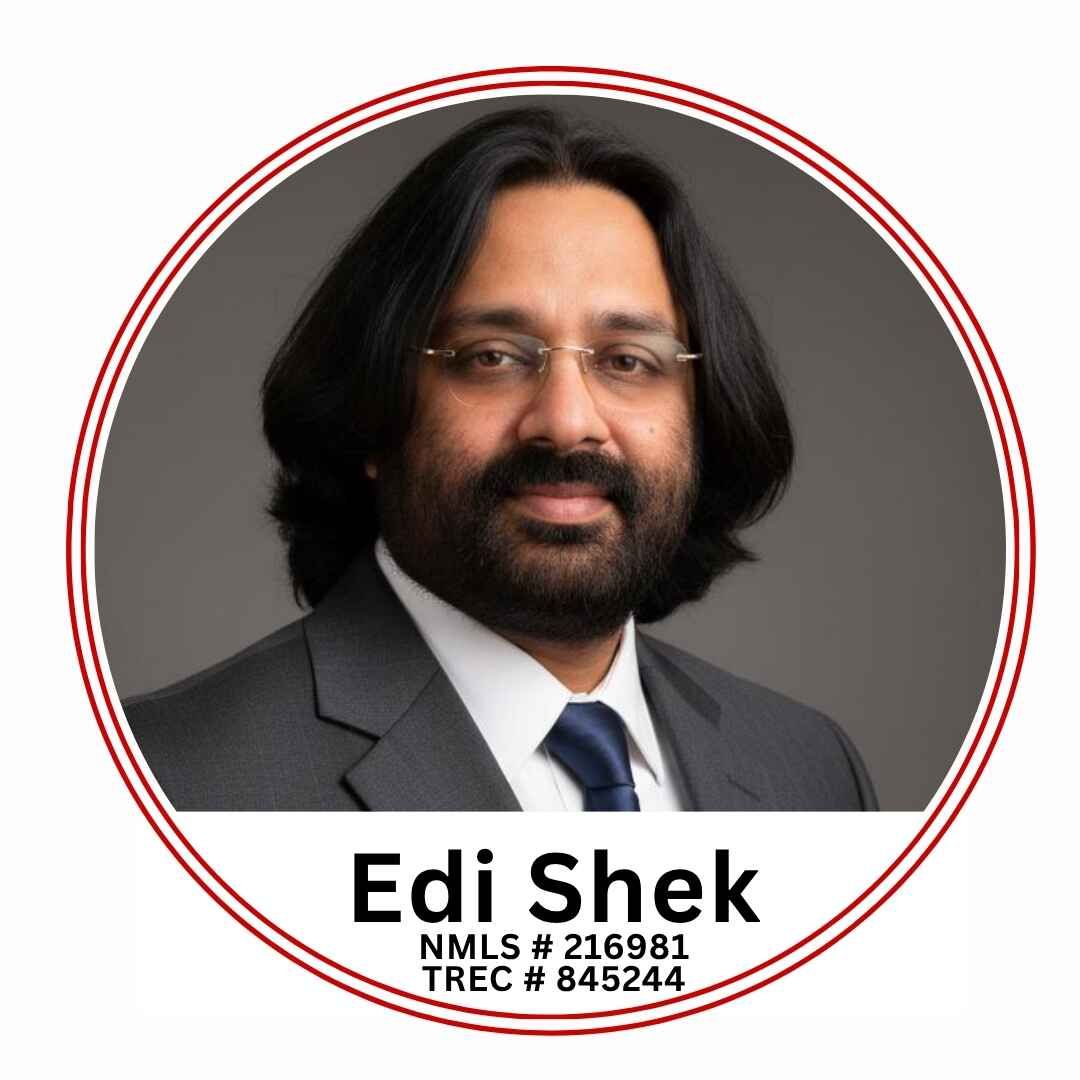 By Edi Shek
Discover how Non-QM loans provide flexible mortgage options for self-employed borrowers, investors, and those with unique income in 2026.
Finding the right home loan can be challenging when your financial profile doesn’t fit into a standard box. This article is for self-employed individuals, real estate investors, and high-net-worth borrowers who need mortgage options beyond traditional bank requirements.
Quick Answer
A Non-Qualified Mortgage (Non-QM) is a loan that does not follow the restrictive federal standards set for traditional mortgages. Designed for creditworthy borrowers with unique income structures, these loans allow for alternative documentation—like bank statements or property income—to prove the Ability-to-Repay (ATR) instead of using standard tax returns or W-2s.
What is a Non-QM loan exactly?
A Non-Qualified Mortgage (Non-QM) is a home loan that falls outside the specific rules established by the Consumer Financial Protection Bureau (CFPB) for a Qualified Mortgage (QM). While QM loans must follow rigid guidelines regarding debt limits and documentation, Non-QM loans offer more flexibility in how a borrower’s income and assets are evaluated. It is important to understand that Non-QM does not mean "unsafe" or "low quality"; it simply means the loan uses alternative methods to verify financial stability.
Following the 2008 financial crisis, the Dodd-Frank Wall Street Reform and Consumer Protection Act created the Ability-to-Repay (ATR) rule. This rule requires lenders to make a reasonable, good-faith determination that a borrower can afford their mortgage. While traditional lenders use tax returns and pay stubs to satisfy this rule, Non-QM lenders use different data points, such as personal or business bank statements, to confirm that a borrower has the necessary cash flow to manage their monthly payments.
In the current 2026 mortgage market, Non-QM loans have become an essential tool for the modern workforce. Since many entrepreneurs and freelancers maximize their tax deductions, their taxable income on a tax return may not accurately reflect their actual buying power. Non-QM lending fills this gap, providing a path to homeownership for those whom Government-Sponsored Enterprises (GSEs) like Fannie Mae and Freddie Mac might otherwise overlook.
Who should consider a Non-QM mortgage?
Non-QM loans are specifically designed for borrowers who are financially stable but have "non-traditional" financial profiles. This group includes self-employed business owners who have significant business expenses that lower their reported taxable income. Because traditional lenders look at the "bottom line" of a tax return, these borrowers often struggle to meet the Debt-to-Income (DTI) ratio requirements of a standard loan. A Non-QM loan allows these borrowers to use their total deposits into a business account as proof of income instead.
Real estate investors are another primary audience for Non-QM products. Many investors look for Debt Service Coverage Ratio (DSCR) loans, which focus on the income generated by the investment property rather than the borrower's personal income. This allows seasoned investors to scale their portfolios without being limited by their personal DTI or the number of financed properties they already own.
Finally, high-net-worth individuals and retirees with significant assets but low monthly income often find Non-QM loans helpful. Through a process called Asset Depletion, a lender can calculate a monthly income stream based on the borrower’s total liquid assets. This is an excellent solution for those who have millions in the bank but no longer receive a traditional paycheck.
How does a Non-QM loan differ from a traditional mortgage?
The primary difference between a Non-QM loan and a traditional mortgage lies in the underwriting process. Traditional mortgages—such as Federal Housing Administration (FHA) loans, Department of Veterans Affairs (VA) loans, or conventional loans—typically use an Automated Underwriting System (AUS). These systems are programmed with strict parameters. If a borrower’s file doesn’t fit those parameters, the loan is often denied automatically. Non-QM loans involve Manual Underwriting, where a human underwriter looks at the full story of a borrower’s finances to assess risk.
Another major difference is the cost and the required down payment. Because Non-QM loans are not backed by the government or the GSEs, they carry more risk for the lender. As a result, interest rates for Non-QM products are typically higher than those for traditional loans. Additionally, while some traditional programs allow for down payments as low as 3%, Non-QM loans usually require a Loan-to-Value (LTV) ratio of 80% or lower, meaning the borrower often needs at least a 20% down payment.
| Option | Best for | Key trade-off |
|---|---|---|
| Conventional QM | W-2 employees with high credit | Very strict documentation and DTI limits |
| Bank Statement Loan | Self-employed and business owners | Higher interest rates than conventional |
| DSCR Loan | Real estate investors | Larger down payment required (usually 20-25%) |
| Asset Depletion | Retirees or high-net-worth individuals | Requires significant liquid assets |
| Foreign National | Non-U.S. citizens buying property | Requires higher reserves and down payment |
What are the most common Non-QM loan programs?
There are several distinct types of Non-QM programs, each catering to a specific financial hurdle. One of the most popular is the Bank Statement Loan. In this program, the lender reviews 12 or 24 months of bank statements to calculate an average monthly income. They might apply a standard expense factor—often 50% for a service business—to determine the qualifying income. This bypasses the need for tax returns entirely.
Another common program is the DSCR Loan, which stands for Debt Service Coverage Ratio. For this loan, the lender looks at whether the property's monthly rental income is enough to cover the Principal, Interest, Taxes, and Insurance (PITI). If the property "covers" its own debt, the borrower's personal income is not even verified. This is an efficient way for investors to close deals quickly without providing personal tax history.
Additional programs include Interest-Only Loans, which allow the borrower to pay only the interest for a set period (usually the first 10 years). This lowers the monthly payment initially, though it does not build equity through principal reduction during that time. There are also Recent Credit Event loans, designed for individuals who have had a bankruptcy or foreclosure more recently than traditional guidelines allow, provided they can demonstrate current financial stability.
Are Non-QM loans the same as subprime mortgages?
It is a common misconception that Non-QM loans are the same as the "subprime" loans that contributed to the 2008 housing market crash. However, they are fundamentally different. Subprime loans often featured "no-doc" or "SISA" (Stated Income, Stated Assets) structures where income was never verified. In contrast, Non-QM loans are fully documented; they simply use different documents. Every Non-QM loan must still adhere to the federal Ability-to-Repay (ATR) standards.
In the 2026 market, Non-QM borrowers typically have strong credit scores and significant equity in their homes. While subprime lending targeted borrowers with poor credit and little to no money down, Non-QM lending targets creditworthy borrowers who have complex income but substantial assets. Lenders mitigate the risk by requiring higher down payments and larger Cash Reserves—the amount of money a borrower has left in the bank after the loan closes.
Because the underwriting is so thorough, Non-QM loans have historically performed well. They serve as a bridge for the millions of Americans who participate in the "gig economy" or run their own businesses, ensuring that these contributors to the economy are not unfairly excluded from the housing market just because their income doesn’t appear on a standard W-2 form.
How do I qualify for a Non-QM loan in today's market?
Qualifying for a Non-QM loan in 2026 requires preparation and a clear understanding of your cash flow. First, you will need to determine which documentation style fits your situation. If you are self-employed, you should have at least 12 months of clean bank statements ready for review. "Clean" means minimal overdrafts and a consistent pattern of deposits that align with your business type.
Credit scores still matter in the Non-QM world. While some programs are more forgiving of past issues, a higher credit score will always result in a better interest rate and a lower required down payment. Most Non-QM programs prefer a score of 660 or higher, though options may exist for those with lower scores if they have a large down payment. You should also be prepared to show Liquid Reserves, which are funds tucked away in savings, stocks, or retirement accounts that could cover several months of mortgage payments in an emergency.
Finally, working with a specialized mortgage professional is key. Not all lenders offer Non-QM products, and the rules can vary significantly from one investor to another. A knowledgeable loan officer can help you navigate the nuances of LTV limits and documentation requirements to find the specific program that rewards your unique financial strengths rather than penalizing you for not having a standard job.
Mistakes to Avoid
- Co-mingling business and personal funds: If you are applying for a bank statement loan, lenders prefer to see business income separated from personal expenses. If your accounts are messy, it makes it harder to calculate your true qualifying income.
- Assuming you don’t qualify because of tax deductions: Many people believe that because their CPA helped them lower their tax bill, they can’t buy a home. This is the exact problem Non-QM is designed to solve; don't count yourself out before exploring bank statement options.
- Waiting until the last minute to gather documents: Non-QM underwriting is manual and detailed. You will need every single page of your bank statements or asset reports. Missing one page can delay your closing by days or weeks.
- Neglecting your credit score: Even though Non-QM is flexible, your credit score is the primary driver of your interest rate. Avoiding new debt or credit inquiries before applying can save you thousands of dollars over the life of the loan.
- Not accounting for higher down payments: While traditional loans offer low down payment options, you should generally expect to put down 20% or more for most Non-QM products. Ensure you have the necessary liquidity before starting your home search.
Key Takeaways
- Non-QM loans provide a path to homeownership for those who cannot provide traditional tax returns.
- These loans are not subprime; they require rigorous verification of the borrower's ability to repay the debt.
- Self-employed individuals can use 12 to 24 months of bank statements to prove their income.
- Real estate investors can use DSCR loans to qualify based on property income rather than personal earnings.
- Expect higher interest rates and larger down payments compared to conventional QM loans.
- Non-QM lending is an essential solution for high-net-worth individuals and those with unique income streams in 2026.
Frequently Asked Questions
Do I need a high credit score for a Non-QM loan?
While Non-QM loans are more flexible than traditional mortgages, they still prioritize creditworthiness. Most lenders look for a score of at least 660, though some programs exist for scores in the low 600s. A higher score typically allows for a lower down payment and a more competitive interest rate, as it reduces the perceived risk for the lender.
Can I get a Non-QM loan with only 3% down?
Generally, no. Because Non-QM loans carry more risk for the lender and are not backed by the government, they require more "skin in the game" from the borrower. Most Non-QM programs require a down payment of at least 15% to 20%. In 2026, the most favorable terms are typically found at a Loan-to-Value (LTV) ratio of 80% or lower.
How is income calculated for a bank statement loan?
Lenders typically review 12 or 24 months of bank statements. For a business account, they will total all qualifying deposits and apply an expense factor—often 50%—to estimate your net income. If you can provide a letter from a tax preparer stating your actual expense ratio is lower, the lender may use that higher figure to help you qualify for more.
What does DSCR stand for in real estate investing?
Debt Service Coverage Ratio (DSCR) is a calculation used by lenders to see if a rental property’s income covers its expenses. It is calculated by dividing the gross monthly rent by the monthly Principal, Interest, Taxes, and Insurance (PITI). If the ratio is 1.0 or higher, the property is considered self-sustaining, allowing the investor to qualify without showing personal income.
Are interest rates much higher for Non-QM loans?
Interest rates for Non-QM products are qualitatively higher than those for traditional W-2 mortgages. This reflects the increased risk of using alternative documentation and the fact that these loans cannot be sold to Fannie Mae or Freddie Mac. However, for many borrowers, the slightly higher rate is a worthwhile trade-off for the ability to secure financing that traditional banks won't provide.
Talk to Edi
If you have a unique financial situation and want to explore the Non-QM options available to you, reach out to Edi Shek for a personalized consultation. Edi is a Licensed Mortgage Loan Originator (NMLS# 216981) currently serving homebuyers and homeowners across 14 states.